
The fastest way to write a TikTok script that works is to start from scripts that already worked. TokScript makes that a 20-minute workflow: transcribe five to ten winning videos in your niche, let the virality analyzer show you their mechanics, then use the hook generator and script rewriter to produce a version that is structurally proven but entirely yours. One TikTok Shop seller case study on the official About page puts the payoff in numbers — conversion lifting from 0.5% to 5.0% after they started studying the exact words behind top-converting product videos.
Step 1 — collect the evidence, not the vibes
Pick a niche query on TikTok, sort by what is demonstrably working, and copy the links of the top performers. Feed them to TokScript in one batch — up to 50 links per run on paid plans, or spread across the free tier’s five daily transcripts — and you get a folder of timestamped transcripts instead of a watch-later list. Reading is the point: watching ten videos costs half an hour and leaves impressions; reading ten transcripts costs five minutes and leaves patterns. Look for how each hook opens, when the promise is made, and where the creator asks for anything.
Step 2 — let the analyzer name the mechanics
Run the virality analysis agent on the strongest two or three transcripts. It annotates what a human skim misses: the hook’s exact landing point, pacing shifts, retention-risk moments, and the structural beats — problem, tension, payoff — in order. This is where a TikTok script writer workflow beats freestyle drafting: you are no longer guessing why a video moved; you have its skeleton on the table.
Step 3 — generate hooks before you write anything
Feed the transcript into the hook generator and ask for variants. A viral hook generator is only as good as its source material — which is why generating from a proven transcript, rather than from a topic prompt, produces lines that carry the original’s tension in your framing. Ad buyers bid on this capability for a reason; hooks are the highest-leverage sentence in the script. Keep three candidates, not one — you will want options against the next step.
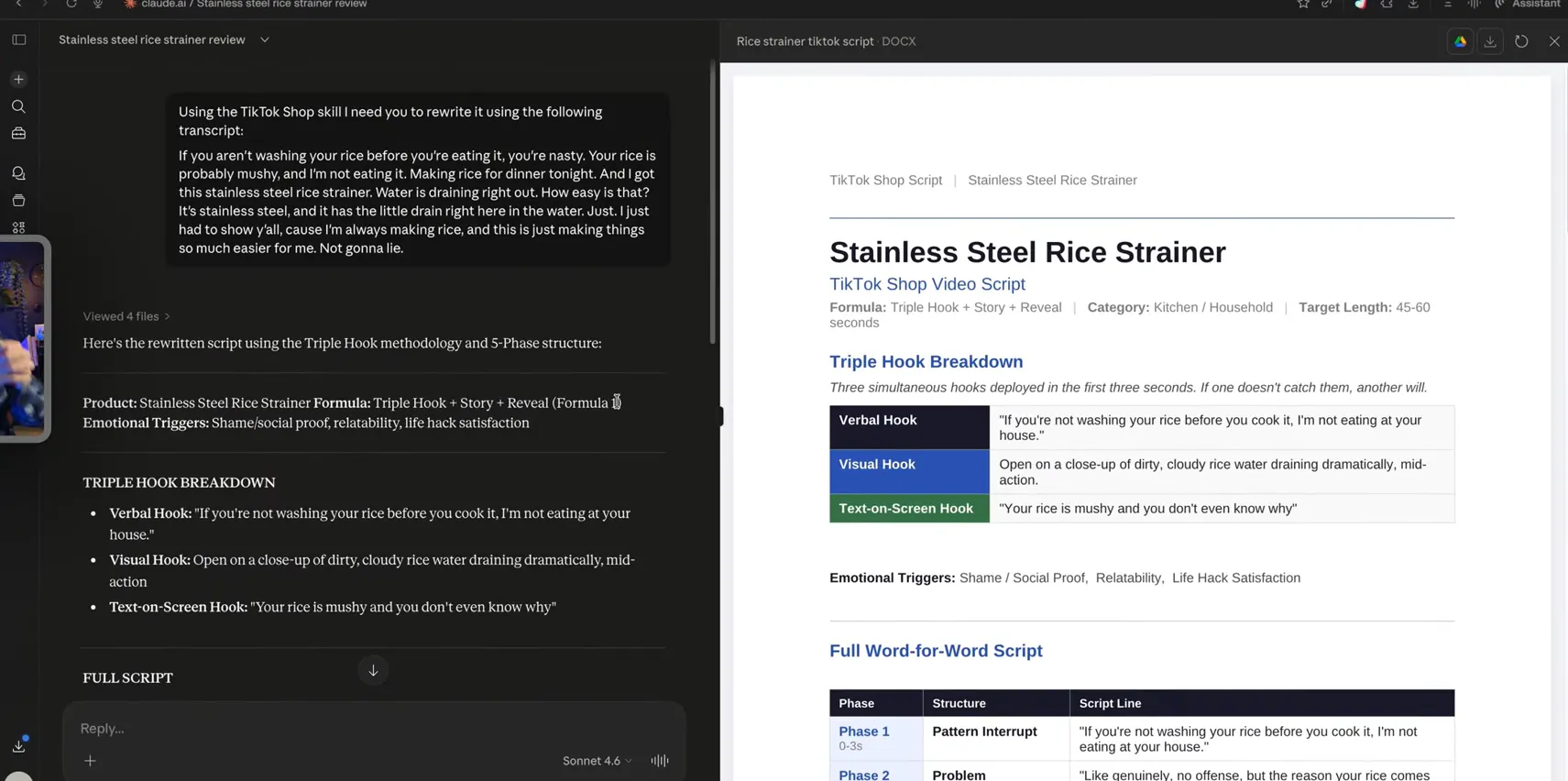
Step 4 — rewrite in your voice, not theirs
The script rewriter takes the winning structure and your constraints — tone, product, length — and drafts the full script. Edit it like an editor, not an author: check the promise lands within the first two lines, cut anything the transcript’s structure does not justify, and keep your own phrasing where the rewrite sounds generic. The goal is structural borrowing, verbal originality — copying words gets you duplicate-content mush; copying structure gets you a format that has already survived the feed.
Step 5 — close the loop with your own numbers
Publish, wait a few days, then transcribe your own video and run the same analyzer on it. Compare where your retention risks sit versus the source material. This loop — evidence, mechanics, draft, measure — is the whole system, and every step runs inside TokScript on a single account. The free plan’s 5 daily transcripts cover the research phase; the agents and batch tools that automate the rest live on the paid plans, and the MCP integration lets you run the entire loop without leaving Claude or ChatGPT.